2-Bromopropane: From Discovery to Future Prospects
Historical Development
2-Bromopropane first appeared in chemical literature as chemists began experimenting with halogenated hydrocarbons in the early twentieth century. Industry needed cost-effective, straightforward synthetic routes, and this compound fit the bill with its simple alkyl backbone and the reactivity afforded by the bromine atom. Over the decades, its roles evolved in step with advances in synthetic chemistry. Industrial demand led to improved production processes, efforts to study health effects, and ultimately, stricter safety standards.
Product Overview
2-Bromopropane belongs to the family of secondary alkyl bromides, with a three-carbon chain and a bromine atom fixed to the central carbon. Chemists turn to this liquid for its ability to introduce a bromo group into organic molecules and for its controlled reactivity in laboratory and manufacturing settings. Used in pharmaceutical intermediates, agrochemical ingredients, and specialty material production, this compound finds application wherever a reliable alkylating agent is needed.
Physical & Chemical Properties
This clear, colorless liquid quickly evaporates at room temperature due to its moderate boiling point, around 59°C. Its density hovers near 1.3 g/cm³, more substantial than water but not unusually heavy for a halogenoalkane. The molecule doesn’t dissolve much in water but mixes easily with organic solvents. The presence of the bromine atom imparts chemical reactivity, especially in nucleophilic substitution or elimination reactions. The odor is harsh and sweet, giving a warning before exposure reaches irritating levels. Like many low-boiling halides, it is flammable, so care is always necessary around ignition sources.
Technical Specifications & Labeling
A reputable chemical supplier usually packages 2-bromopropane in steel drums or sturdy glass bottles with specifications highlighting purity (often exceeding 98%), water content, refractive index, and acidity. Labels cite its chemical formula (C3H7Br), molecular weight (123.0 g/mol), CAS number (75-26-3), hazard pictograms signaling flammability and health risks, as well as proper shipping names and codes mandated by international transport regulations. Handling guidelines highlight ventilation, eye protection, and spill protocols. Each batch is tracked to assure traceability from production all the way to the laboratory bench.
Preparation Method
Classical textbooks describe the synthesis via reaction between isopropanol and hydrobromic acid, sometimes in the presence of sulfuric acid for higher yields. Manufacturers looking for industrial scale often choose the reaction of isopropyl chloride with sodium bromide, which replaces the chlorine with bromine. Modern green chemistry initiatives investigate ways to cut waste and energy use during production. These methods are always affected by economic factors, balancing yield, purity, and raw material sourcing against environmental and safety considerations.
Chemical Reactions & Modifications
2-Bromopropane acts as a versatile intermediate, taking center stage in many formation and modification reactions. In the hands of a synthetic chemist, it serves as a starting material in Grignard reactions where it combines with magnesium to form isopropylmagnesium bromide, opening doors to a vast world of alkyl additions. Its tendency to participate in nucleophilic substitutions enables the construction of ethers, sulfides, and amines. Under basic conditions, it can undergo elimination to produce propene. Sophisticated methods allow insertion into complex molecular scaffolds for pharmaceuticals and fine chemicals, giving chemical companies flexibility and choice.
Synonyms & Product Names
This compound shows up in inventories under a range of names: isopropyl bromide, 2-propyl bromide, and propan-2-yl bromide all point to the same chemical core. Trademarked names appear occasionally, especially for high-purity grades or stabilized formulations designed for specific industry needs. Consistency in labeling is critical in modern labs and factories, since a simple naming mix-up can trigger compliance headaches or worse, safety incidents.
Safety & Operational Standards
Regulators take the hazards of 2-bromopropane seriously. Prolonged or repeated exposure has led to nerve damage, reproductive effects, and hematological disorders in documented cases. Standards enforce strict storage in cool, well-ventilated spaces, away from acids, bases, and ignition sources. Operators wear gloves, goggles, and protective clothing. Fume hoods or exhaust systems capture vapors before they spread through workspaces. Spill kits rely on absorbents that won’t react or carry the liquid to drains. Emergency procedures train teams to isolate areas and seek medical advice for significant exposures. Respect for the compound’s risks keeps productivity high and accident rates low.
Application Area
Manufacturers and researchers value 2-bromopropane as an alkylating agent in pharmaceutical syntheses, producing intermediates for analgesics, antihistamines, and steroids. Specialty resins and polymers families owe part of their backbone to isopropyl groups introduced through this compound. In laboratory settings, it plays a role in making fluorescence probes and structural probes for analytical chemistry. Agrochemical research taps it for constructing building blocks of pesticides and herbicides. Each use tests the flexibility of the molecule in different synthetic routes, driving development of robust processing strategies.
Research & Development
Research efforts focus on improving production efficiency, substituting greener reagents, and discovering novel transformations involving 2-bromopropane’s moiety. Recent academic reports highlight new catalysts that reduce energy consumption and waste generation. Advanced spectroscopic studies shed light on its reaction pathways, supporting the design of safer, more selective chemistries. Efforts also assess biodegradation and environmental persistence to guide safer lifecycle management. Partnerships between universities and industry facilitate continuous improvement through both bench-scale and pilot-scale projects.
Toxicity Research
Early case studies and workplace surveillance revealed the specific danger 2-bromopropane poses to reproductive and nervous health, spurring more intensive toxicological studies. Research teams track metabolic products, map DNA reactivity, and measure long-term impacts in both animal models and exposed workers. Progress has led to stricter airborne exposure limits and clear labeling for personal protective equipment. Toxicologists seek antidotes or mitigation agents for accidental exposure but agree that prevention remains the best approach.
Future Prospects
Looking ahead, chemists face the dual challenge of harnessing 2-bromopropane’s utility while reducing its health and environmental burdens. Innovation steers toward catalysts that boost molecular selectivity, cutting down on unwanted byproducts or hazardous intermediates. Regulatory trends push markets to adopt stricter supply chain controls and invest in safer handling practices. Alternatives and derivatives may take over some application areas, especially where environmental persistence is a concern. Yet new applications in specialty materials and green chemistry remind us that even established chemicals continue to evolve with advances in science and technology. The future likely brings a managed, safer relationship with this classic synthesis tool, balancing risk and reward.
How 2-Bromopropane Fits Into Modern Chemistry
Looking at the world of industrial chemistry, 2-bromopropane catches interest for a few reasons. It’s a clear, colorless liquid, and it often shows up in labs because it behaves as a handy intermediate. Companies depend on it for making new compounds that end up in everything from pharmaceuticals to agricultural chemicals. I remember talking with a chemist friend who said reactions with 2-bromopropane rarely give trouble, which puts it near the top of their list in the lab.
Building Blocks for Research and Industry
Many specialty chemicals, like solvents and coatings, rely on a solid supply chain. 2-Bromopropane serves as an important building block here. For example, in making pharmaceuticals, tiny changes to a molecule often change how a drug works. 2-Bromopropane lets chemists make very specific molecules by adding or swapping parts on a carbon chain. Its straightforward structure means fewer surprises in the lab—something every researcher appreciates.
It also makes a difference in producing agrochemicals. That field requires products with clear performance and safety records. The chemical’s structure helps develop new crop-protection agents, bringing food security challenges a bit closer to workable solutions. According to data from supplier inventories, 2-bromopropane routes show up frequently in synthesis papers and scale-up reports.
From Solvents to Cleaners: Real-World Uses
I once worked alongside a team in an industrial plant. They valued 2-bromopropane as an intermediate and sometimes as a solvent itself. While other solvents gained more attention, some processes needed something with just the right boiling point and reactivity. For tough separations or unique reactions, process engineers picked 2-bromopropane because it didn’t react with metals and worked well under a range of temperatures.
Some cleaning formulations also use it. Every time you rely on a precision cleaner for electronics or delicate instruments, there’s a good chance the supply chain touched 2-bromopropane somewhere along the line. This shows how it blends practicality with efficiency, which modern manufacturing demands.
Concerns and Responsible Production
No useful tool is free from downsides. In the 1990s, researchers flagged certain health risks for workers exposed to high levels of 2-bromopropane, particularly in South Korea and Japan. Cases of toxicity, affecting blood and reproductive health, led regulators to push for more protection, tighter monitoring, and improved ventilation in workplaces using it. Lessons learned here changed not just company policies but also stirred up conversation about safe chemical handling everywhere.
Finding solutions comes from better personal protective equipment and tighter guidelines. Improved training and monitoring in factories made a real difference—the number of health incidents linked to 2-bromopropane dropped as changes took hold. Green chemistry principles now push companies to look for less hazardous alternatives, aiming to reduce risks while staying productive. Industry experts agree: the balance between safety and performance proves that responsible use can work hand-in-hand with scientific progress.
Understanding the Risks
Those of us working in the lab, or around any chemical storage area, know that safety isn’t just about rules posted on a wall—it’s a daily practice. 2-Bromopropane comes with its own set of hazards. This clear, colorless liquid catches fire easily and can irritate the eyes, skin, and lungs. Heavier exposure sometimes links to nerve problems or effects on fertility—health impacts most folks want to avoid. People who spend their days around organic solvents notice right away: if something has fumes, respect the fumes.
Personal Protective Equipment Isn’t Optional
Every experienced chemist finds out early that gloves, goggles, and a lab coat do more than keep the outfit clean. Nitrile gloves tend to handle 2-Bromopropane best because latex can break down. Full splash protection for the eyes prevents the kind of accident that ruins your day, or far worse. Forgetting your lab coat, or rolling up your sleeves, leaves skin exposed to accidental spills. In places where vapor builds up, a properly fitted respirator or fume hood keeps breathing safe. Stories of headaches and dizziness from hasty handling echo through every research group, but a bit of care prevents so many incidents.
Proper Storage Reduces Risks
Chemicals like 2-Bromopropane live best in sealed containers stored in a cool, ventilated spot. Flammable cabinets keep it away from heat and electrical sparks. Labels should stay clear with dates easy to read—so nobody’s left wondering what’s inside. Small spills become bigger problems in crowded spaces, so regular checks prevent serious cleanups later. My own habit has always been to double-check container lids and clear away clutter before locking up for the night.
Ventilation Makes a Big Difference
If the room smells like solvent, that’s a red flag. Fume hoods aren’t just another piece of furniture. They move harmful vapors away before they cause harm. Keeping the sash low and never reaching inside beyond the sash line gives one more layer of protection. Families of folks who work with chemicals can recall times someone ignored that lesson, and ended up with a bad cough or watery eyes.
Emergency Planning Saves Time and Health
Accidents happen. Knowing the location of eyewash stations and emergency showers is a lifesaver. Having a spill kit stocked and within arm’s reach can make a mess stay small. I remember an early job in a research lab—no one panicked when a bottle tipped, since every shift started off with a review of exit routes. Quick, calm responses cut down on injuries and damage. Spilled chemicals get handled with absorbent pads—no one wants to touch them directly.
Training and Communication Matter
Reading a safety data sheet sounds boring, but those pages spell out what to do if someone gets exposed. New workers benefit from shadowing experienced staff before handling anything on their own. Open conversations about good and bad lab habits get everyone thinking about safety, not just following old routines out of habit. Clear instructions and checklists help the most at the end of a long day, when tired mistakes creep in.
Waste Disposal Doesn’t End at the Sink
Pouring extra solvent down the drain isn’t just careless, it can land someone in serious trouble with regulators, and pollute water supplies. Used 2-Bromopropane should always go into clearly labeled waste containers, ready for pick up by hazardous waste teams. Every year, news breaks about illegal dumping and contamination—those stories point to corners cut in busy labs.
Structure and Formula: Unpacking 2-Bromopropane
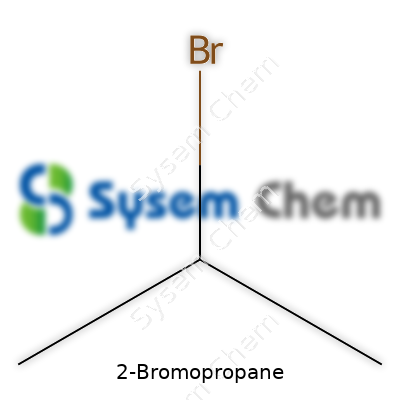
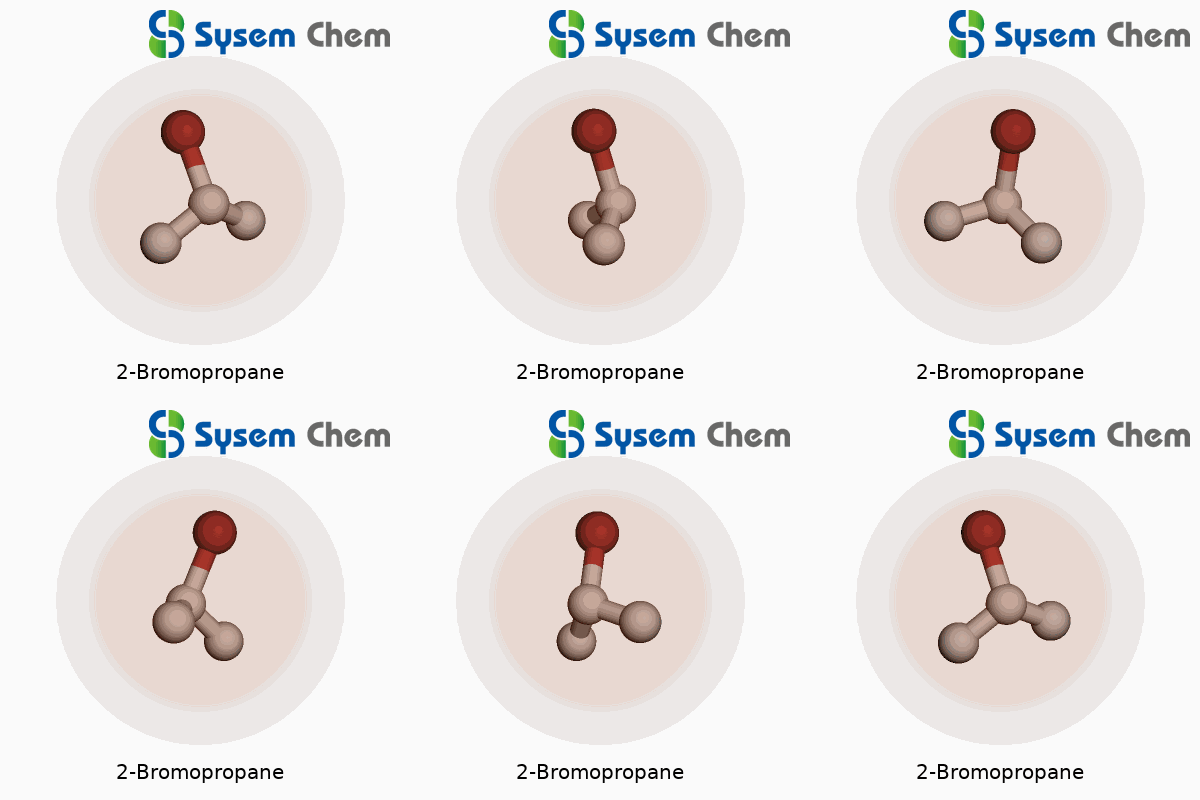
2-Bromopropane shows up in chemistry labs and chemical plants more often than many would expect. Its chemical formula is C3H7Br. You can picture its structure as a three-carbon propane chain, with a bromine atom taking the middle position, booting out one of the hydrogen atoms. On paper, its molecular structure looks like this: CH3–CHBr–CH3. If you try to draw it out, you get a simple line with three carbon atoms in a row, the bromine attached to the second one. Nothing fancy—nothing cagey. The simplicity of the structure helps it become quite useful, especially in organic synthesis.
Why Structure Matters in Real-World Chemistry
Putting bromine on the second carbon gives 2-bromopropane some unique qualities. For anyone who’s worked with halogenated hydrocarbons, it serves a clear function as an intermediate. It delivers more reactivity at that center position. That matters in substitution and elimination reactions. You can make all sorts of other chemicals from it—pharmaceutical intermediates, other brominated products, or as a way to test how reactions behave with secondary alkyl halides rather than primary ones.
The physical effect of that structure is real: 2-bromopropane boils at about 59°C, and doesn’t dissolve in water too well. Lab workers treat it seriously because, as simple as it looks, improper exposure brings health hazards. It can irritate skin, affect the nervous system, and handling always calls for gloves and good ventilation. I recall the first time using it during an undergraduate synthesis—our instructor hammered home the need for careful measuring and immediate cleanup. You catch that sharp, musty odor in the air, and you know instantly you’re around something that demands respect.
Safety and Responsible Handling
Safety with 2-bromopropane stands out as a top concern. The chemical may get absorbed through the skin, and chronic exposure cases point to some real health effects, including issues with reproductive health in poorly ventilated factories. Good science means responsible science. Factories now use local exhausts, personal protective gear, and regular air quality checks. Real knowledge about the molecular structure also informs storage choices: airtight containers, away from heat, acids, and strong bases—2-bromopropane doesn’t play nice with all other chemicals.
Looking for Solutions in Sustainable Chemistry
Modern labs keep pushing for safer alternatives. While 2-bromopropane still holds its place, researchers explore greener reagents with lower toxicity and improved biodegradability. The push comes from both inside and outside the chemical industry. Workers unionize or advocate for higher standards, and producers keep up with changing regulations because consumers and government authorities keep a close watch on occupational risks. Labs lean towards smaller batch runs and close-loop systems to reduce waste. As environmental and occupational health understanding rises, teams track air levels in real time, encouraging better training and transparency.
Summary
2-bromopropane—C3H7Br, to keep it short—reflects both the straightforwardness and challenge in organic chemistry. Knowledge of its structure, combined with direct safety practices and a growing drive for sustainable alternatives, shapes how chemists handle it today. Grasping its formula opens doors for better science and cleaner industry.
Why Storage Matters for 2-Bromopropane
In the world of lab chemicals and industry, few topics strike a chord like chemical safety. Bring up 2-Bromopropane, and you can see worry in the eyes of anyone who remembers handling toxic substances. Some folks treat chemical storage as a chore. Big mistake. This kind of thinking invites avoidable disaster.
2-Bromopropane throws a real curveball. As an alkyl halide, it acts as a solvent. In research or manufacturing, you might find it standing in for more hazardous options like dichloromethane. The health stories connected to it, including nerve and reproductive system damage, keep returning in safety meetings and regulatory updates. It demands respect and a working knowledge, not just from the lab manager but from every person who might walk into that supply room.
Practical Steps: Secure, Seal, and Label
No complicated technical jargon or abstract policies needed. People want to know: where and how do you keep this stuff? Secure, cool, dry storage is not just a mantra; it’s a rule for anything remotely volatile. I once saw a young technician stick a bottle of 2-Bromopropane on top of a fridge, “out of the way.” That exposure to heat, plus air currents, spells trouble. Vapor leaks, fire hazards, and corrosion come faster than most think. I've seen small mistakes lead to blown budgets and weeks of remediation.
Metal cans or amber glass bottles with tightly fitting caps block both light and moisture. Forget those old snap-on plastic lids—you need real seals. Regular chemical rooms work only if they don’t share space with oxidizers or acids. In my own teaching lab days, a single misfiled bottle led to a shelf fire scare. Nothing burns into your memory like showing up in the early hours to flashing fire alarms. Segregation of chemicals is not a suggestion. It’s a survival tactic. Use dedicated shelving and secondary containment trays, just like you’d want in a kitchen pantry for strong-smelling cleaners. If it leaks or tips, the spill stays put.
Ventilation and Staff Awareness
Some buildings rely on old ventilation to “air things out.” That never works in spaces storing volatile organics like this. Local exhausts and fume hoods make the difference between controlled vapors and unexplained headaches. A couple of times, I watched maintenance crews ignore warning tapes to “just check wiring.” They barely avoided a chemical splash. Clear labeling keeps people informed, especially when language barriers or shift changes enter the picture. Pictograms and warnings help where formal training falls short.
Inventory and Handling
Tracking chemical stocks is more than paperwork. You need regular checkups and up-to-date logs. Skipping routine checks leaves you chasing expired or leaking containers. I remember once sifting through dusty shelves on an audit, discovering a neglected bottle years past its shelf life. We dodged a bullet, but only because the container hadn’t cracked.
Protective gear matters. Gloves, goggles, and lab coats should hang close to the storage door. Workers appreciate managers who offer simple, clean instructions instead of heavy manuals. And don’t forget spill kits and eyewash stations. In my experience, the teams that drilled regularly knew exactly what to grab in a pinch—no wasted seconds, no confusion.
Building toward Culture, Not Just Compliance
2-Bromopropane offers a clear lesson: chemical safety starts with everyday habits, clear systems, and honest communication. Getting this right means fewer emergencies, healthier staff, and less red tape. People want workplaces where care runs deeper than just token signs or dusty safety binders. It comes down to action—secure storage, clear procedures, and the will to speak up before something goes wrong.
Getting a Handle on 2-Bromopropane
2-Bromopropane feels familiar to chemists working with small alkyl halides. You find this compound as a clear, colorless liquid that gives off a faint, sharp odor—enough to sense the presence but not overwhelming. Its chemical formula, C3H7Br, means the molecule has a short carbon chain with a single bromine atom taking the place of a hydrogen on the second carbon. This structure lets it fit into all sorts of laboratory reactions where you want a bromine atom to trade places or activate a reaction.
Boiling and Melting Points: The Basics
2-Bromopropane boils at about 59°C. This temperature sits a bit above other small alkyl halides like propane, thanks to the bigger bromine atom locking molecules together with stronger forces. Its melting point runs down near -121°C, which keeps it liquid even in deep cold. I’ve stored small bottles of it in an ice bath with no trouble; the liquid stays fluid and pours easily.
This narrow liquid range gives lots of flexibility for synthesis. In practical lab work, it evaporates much faster than water, so open bottles don’t last long on the benchtop. You quickly get a sense that its volatility can trip you up if you don’t work in a fume hood or keep containers tightly sealed.
Density and Solubility in Practice
A density of 1.31 g/cm3 puts 2-bromopropane on the heavier side for small organic liquids. It sinks in water, which matters when separating layers after an extraction or cleanup step. Pouring it out, you notice the liquid feels slightly “oily,” gliding along glass and plastic surfaces without much resistance but clinging more than water would.
Solubility in water stays low, so you won’t catch 2-bromopropane dissolving away in an aqueous phase. It fits well with other nonpolar solvents like ether, acetone, and most hydrocarbons. In workups, shaking a flask often brings a clean layer separation, which simplifies purification. This is helpful for students and professionals alike, since fewer mix-ups mean less waste and less risk.
Vapor Pressure and Flammability
At room temperature, 2-bromopropane gives off enough vapor to build up pressure inside a sealed bottle. This property keeps safety in my mind; even a small spill will fill the air with its distinct scent, sometimes giving you a bit of a headache. It doesn’t ignite easily, but those vapors can still catch fire with a strong ignition source. For anyone used to handling volatile chemicals, flame arrestors and good ventilation belong within reach.
Lower volatility and higher density set 2-bromopropane apart from lighter haloalkanes, keeping it manageable for most standard procedures. Still, accidents happen. I learned to double-check every cap and keep all sources of heat well away.
Health and Handling: The Real-World Angle
Direct skin or eye contact can irritate, just like most short-chain brominated compounds. Most labs require gloves, goggles, and fume protection, not only for regulatory reasons but because of lessons learned from accidental splashes or spills. Inhalation brings a risk of headaches and dizziness, and regular exposure can harm health in the long run. Label warnings exist for a reason—some animal studies raised questions about reproductive toxicity, so nobody should treat this as an ordinary solvent to splash around.
Safer handling often means using the minimum amount needed, keeping good airflow, and maintaining emergency showers nearby. Simple awareness—not just rules—keeps people safe. Proper labeling helps avoid confusion, as this liquid blends into other colorless solvents on a crowded bench.
Supporting Smarter Choices
2-Bromopropane’s physical properties—boiling point, density, solubility, vapor pressure, and basic hazards—shape its precise role in scientific work. Laboratories need this information not only for mixing or separating compounds, but for keeping people protected and waste minimized. Checking reference data, practicing careful handling, and staying alert to individual lab policies go a long way—all supported by decades of real-world chemical safety research.