2-Chloropropane: Past, Practice, Possibility
Historical Development
2-Chloropropane did not start as an industry staple. Chemistry labs in the early 1900s looked to halogenated compounds for advancements in solvents, intermediates, and teaching materials. By the 1960s and 1970s, wider access to petrochemicals meant experimentation with chlorinated propanes took off. Academic research and some manufacturing innovation drove its emergence, usually in the shadow of better-known relatives like dichloropropane or isopropyl chloride. Over time, researchers saw the unique balance in its three-carbon backbone, its reactivity profile, and its clean conversion routes from propene. From what I’ve seen in archived journals, breakthroughs came from young chemists who needed a test case for substitution mechanisms more than from targeted industrial demand.
Product Overview
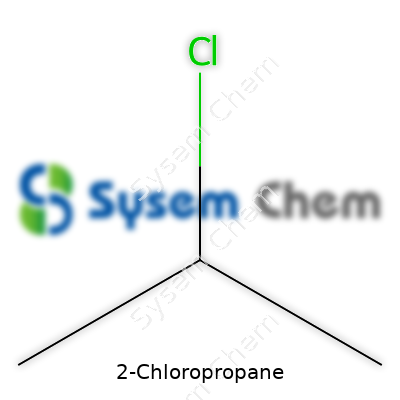
2-Chloropropane (also known as isopropyl chloride) marks its place thanks to a straightforward structure: a propane core, one hydrogen swapped for a chlorine atom on the middle carbon. This formula—C3H7Cl—pushes it into a unique class of secondary alkyl halides. It enters the market in colorless, volatile liquid form, packaged for both research and scale-up. In the workplace, the faintly sweet odor gives it away before a label appears in sight. What most users remember isn't the look or smell, but the way it unlocks new carbon-chlorine chemistry. Its presence in labs and reactors brings a window into both substitution and elimination reactions, offering a simple but revealing model to teach classic organic principles.
Physical and Chemical Properties
The physical properties of 2-Chloropropane tell a revealing story. There’s a boiling point sitting near 35–37°C, just a hair above room temperature, so the liquid quickly turns to vapor unless kept cool or pressurized. Its density comes in around 0.87 g/cm³, and anyone who’s spilled it notices the rapid evaporation. It doesn't mix well with water, but dissolves easily in most organic solvents, making cleanup a tricky proposition. Chemical stability fares well under dry, cool storage; in oxygen-rich settings or strong light, breakdown can creep up. The molecule carries a good deal of reactivity—its secondary carbon-chlorine bond opens the door for both nucleophilic substitution and elimination—providing a playground for anyone exploring basic organic mechanisms.
Technical Specifications & Labeling
2-Chloropropane usually ships with the tag “min. 99% pure.” The faint presence of isomers or traces of unreacted propane gets noted in technical sheets. Most reputable suppliers provide a Certificate of Analysis with gas chromatography data, batch number, and recommended storage conditions: always tight-sealed, away from open flames or oxidants. Labeling spells out hazard symbols—flammable, irritant, environmental risk—under GHS standards. For teaching or process manuals, clear bottle or drum labeling often includes UN number 2357. This clarity doesn’t just meet regulations; it helps prevent the type of confusion that can endanger hands-on workers and research teams.
Preparation Method
Industry and academic syntheses both start with propan-2-ol (isopropanol) or propene as the backbone. The standard route means bubbling dry hydrogen chloride through isopropanol with a dehydrating agent like zinc chloride at low temperature. This approach delivers good yields without a need for exotic reagents. Common alternatives swap in thionyl chloride, phosphorus pentachloride, or phosgene, especially in skillet-scale demonstrations needing robust conversion. Factory production leans toward continuous reactors with close control over gas flow and venting, since any slip means release of noxious vapor. From small-scale glassware to plant systems, careful monitoring of temperature and acid excess helps sidestep a buildup of impurities or unwelcome byproducts.
Chemical Reactions & Modifications
Chemists turn to 2-Chloropropane for a clear road into secondary substitution chemistry. Reactions with strong nucleophiles—think sodium ethoxide or potassium iodide—swap chlorine for other groups, with the product depending on solvent and temperature. Elimination comes into play with bases; a typical run with potassium tert-butoxide strips off HCl and delivers propene, a textbook example of E2 reactivity. Sometimes, laboratories modify it under mild oxidation or couple it with aromatic rings using Friedel–Crafts conditions, underscoring its versatility as a feedstock. In practice, this compound trains students and enables scale-up runs, since its reaction patterns map closely to many pharmaceutical or agrochemical intermediates.
Synonyms & Product Names
2-Chloropropane appears on invoices and chemical lists under a swarm of names: isopropyl chloride, secondary propyl chloride, 2-propyl chloride, and sometimes just sec-propyl chloride. The CAS number 75-29-6 helps labs and factories sidestep confusion, especially with 1-chloropropane or related chlorinated hydrocarbons. Different suppliers stamp their own trade names or abbreviations, but the core molecular identity stays the same. This tight web of aliases makes fast reference easy during procurement or regulatory checks.
Safety & Operational Standards
Working with 2-Chloropropane, it pays to know the risks more than just memorize the safety sheet. The liquid and its vapors catch fire at low temperatures, with flash points below −20°C. Those sweet-smelling fumes can irritate lungs and eyes, and handling calls for well-ventilated hoods, tight gloves resistant to solvents, and chemically rated goggles. Occupational exposure limits match those for volatile organic solvents: don't let vapors climb beyond 50 ppm in air. Drum storage should always avoid heat, sparks, static discharge, or mixing with strong bases. Spill response means absorbent pads, ventilated cleanup, fast disposal—no shortcuts. Direct skin or eye contact needs immediate thorough wash-out and medical attention if any irritation lingers. Most of all, teams benefit from regular safety drills on handling, containment, and spill cleanup because no one remembers the protocol until something leaks or splashes.
Application Area
2-Chloropropane steps in as a sturdy intermediate for organic synthesis, especially in pharmaceuticals, dyes, and specialty chemicals. Labs use it to probe reaction mechanisms or test substitutive strategies, since its secondary carbon challenges both substitution and elimination conditions. On larger scales, factories fold it into stepwise syntheses for amines, ethers, or various alkylated products. Some industrial solvent blends use it where volatility and moderate polarity matter. Outside manufacturing and research, there's little consumer use, and regulation tightly restricts it given fire risk and potential health effects. A surprising number of pilot-scale drug syntheses—especially those chasing new antihistamines or analgesics—lean on 2-Chloropropane because the secondary structure lends key properties to target molecules. I've seen it help shave weeks from process development when teams need a nimble alkyl chloride in the pipeline.
Research & Development
Research circles keep coming back to 2-Chloropropane, both to understand classic organic transformations and to design faster, greener methods. Tutors run demonstrations on SN1 versus SN2 routes, helping generations of chemists catch the nuance of rearrangement versus direct displacement. Process chemists run kinetic studies and scale-up tests, chasing more selective yields with less environmental burden. Some groups experiment with new catalysts, hoping to improve selectivity or reduce waste in commercial runs. Environmental research spurred by green chemistry trends explores new trapping methods for chlorinated volatiles, trying to cut losses and lower workplace emissions. The simplicity of 2-Chloropropane means it rarely grabs headlines, but in many technology incubators and contract labs, it enables quiet, constant progress.
Toxicity Research
Toxicity studies on 2-Chloropropane track the risks both for workers and for any release into the environment. Acute exposure often leads to mucous membrane irritation, headaches, or nausea, with central nervous system symptoms at high inhaled doses. Animal studies suggest moderate toxicity, with liver and kidney changes after chronic exposure. The breakdown byproducts—hydrochloric acid and carbon monoxide—add to the hazard mix. Risk assessment teams monitor water solubility because surface run-off spells trouble for aquatic life; environmental regulations mark it as a substance of concern even at low concentrations. Absence of persistent environmental build-up makes cleanup less daunting, but the volatility and human health risks need every worker to follow strict handling rules. In my own work, even a stray fume slip triggered headaches in a closed lab—ventilation and fast response matter more than trusting PPE alone.
Future Prospects
As industry pivots toward sustainability, 2-Chloropropane faces both opportunity and scrutiny. Replacement of more persistent halogenated solvents in legacy processes creates new demand for rapid conversion intermediates with a cleaner break down. Advances in continuous flow synthesis and digital process monitoring pair well with its volatility, lowering risk of worker exposure and curbing emissions. Some academic labs chase more selective catalysts for its conversion, aiming to keep yields high while trimming waste. Health concerns and stricter regulation challenge uncontrolled use, so forward-thinking manufacturers design containment, carbon capture, and in-line monitoring right alongside chemistry scale-up. Teaching labs may eventually swap it for greener analogues, but its value as a window into real-world reactivity secures its spot for the next several decades. My own view—after seeing both the trouble and the advantage in regular use—suggests that with the right safety footprint and next-generation containment, 2-Chloropropane will keep offering value as chemistry grows smarter and cleaner.
A Closer Look at This Chemical’s Role
2-Chloropropane isn’t the sort of name that sparks imagination for most people. You don’t see it every day on a label in the grocery store or on a cleaning product under your sink. Despite its low profile, this chemical keeps popping up in labs, research discussions, and sometimes in the fine print of manufacturing sheets. Most folks will never directly use it, but the footprint of 2-Chloropropane stretches into areas of science and industry that matter.
How Scientists and Manufacturers Use 2-Chloropropane
Chemists know 2-Chloropropane as a solvent and as a building block for bigger, more complex molecules. In my time working alongside research teams, I've seen the appreciation they have for solvents that behave predictably, don’t linger where they shouldn’t, and don’t break the budget. In organic synthesis labs, 2-Chloropropane helps kickstart reactions that need a bit of an extra push. Here, it often swaps out with other solvents when conditions call for a specific boiling point or when researchers hunt for better reaction outcomes. Professionals value it not because it’s flashy, but because it gets the job done in processes for making medicines, plastics, or specialty chemicals.
A more specialized use puts 2-Chloropropane at the start of bigger chemical projects. It often enters reaction mixtures to introduce a “chlorine handle” onto a molecule. Chemists can then swap out that chlorine later for something with more value, building up to larger, complicated compounds used in everything from pharmaceuticals to herbicides.
Worker Safety: Always Part of the Conversation
No real discussion of chemicals makes sense without talking about safety. My own experience tells me that even the straightforward compounds deserve respect. 2-Chloropropane comes with some risks — it can irritate the skin and eyes, and its fumes need to stay out of the lungs. Companies that use this chemical run routine checks and require proper protective equipment. Good ventilation, gloves, and clear safety drills cut down the risk. The science behind why this works comes from decades of occupational health research, proving that these small changes make a difference over time. When accidents happen, they rarely result from the properties of the chemical itself but from lapses in safety habits.
Why Understanding Chemical Ingredients Matters
Knowledge builds trust, especially with industrial chemicals pulling weight behind the scenes. Being aware of what goes into certain products or research processes keeps decision-makers accountable. Regulators across North America and Europe track substances like 2-Chloropropane, so unsafe practices can’t slip through unnoticed. This traceability also helps organizations phase out chemicals that start to show signs of trouble, such as suspected links to pollution or toxicity.
Moving forward, one concrete solution lies in open information sharing between companies, labs, and communities. Where folks can ask: What is this chemical? Who may come into contact with it? How are risks handled? From my own background in lab environments, the places with the safest records were always the most transparent ones. Training, honest hazard communication, and regular feedback keep dangers low and respect for these substances high.
Understanding 2-Chloropropane’s Structure
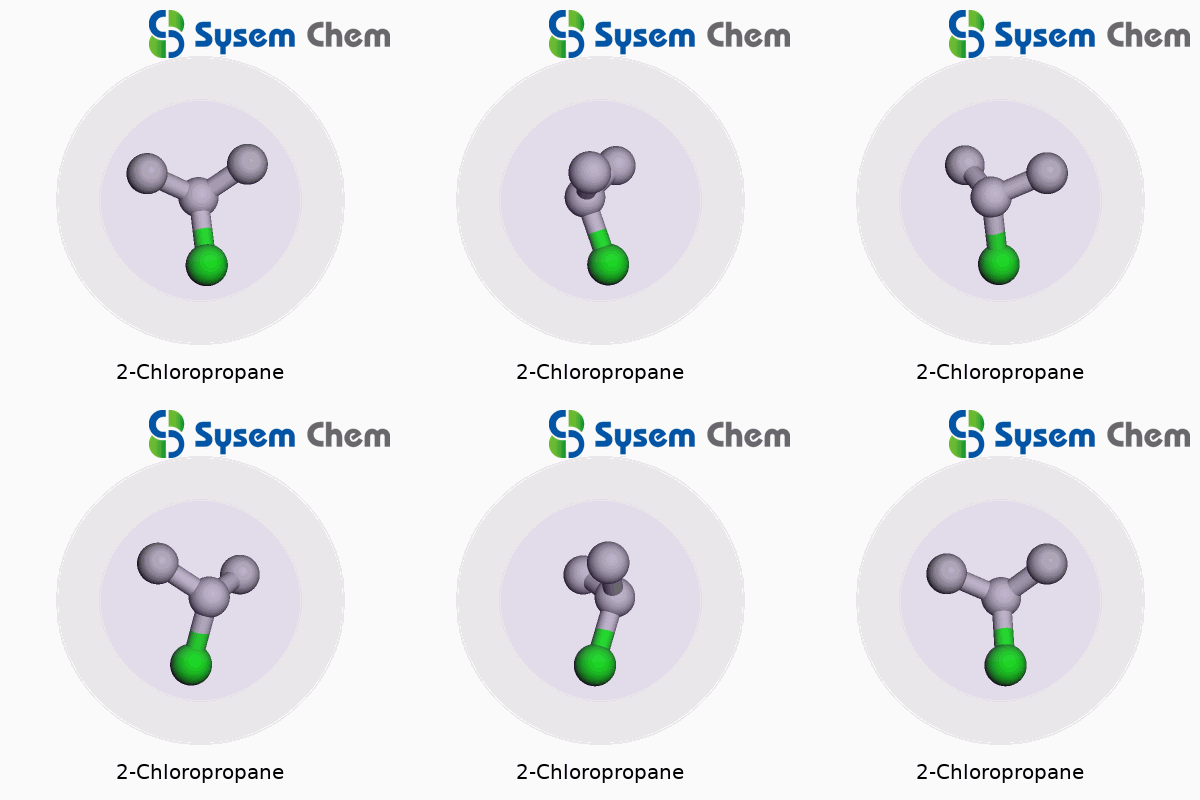
Every compound carries its own signature—a set of elements bound in a particular way. For 2-chloropropane, that signature reads as C3H7Cl. This formula shows the presence of three carbon atoms, seven hydrogens, and a single chlorine atom joining them. What makes 2-chloropropane more interesting is where that chlorine attaches. Signal to any chemist: that “2-” means it’s hooked onto the second carbon, not the edge of the chain.
Chemistry in Everyday Life
Knowledge isn’t just for textbooks or labs; it’s woven into the choices industries and professionals make daily. In the chemical industry, knowing that C3H7Cl formula means workers handle and store the right substances safely. One wrong digit or a misplaced atom could set the stage for accidents or wasted resources. A lot rides on the accuracy of this basic information.
Schools put a strong focus on building blocks of chemistry because once people start working with real chemicals, a slip in logic could cost money or safety. I remember a professor drilling the molecular formulae into our heads—now it’s clear why. That painstaking attention to detail reflects a discipline that saves lives.
2-Chloropropane in Industry and Research
2-Chloropropane holds its own as an alkyl halide, used as an intermediate in producing other chemicals. Factories can use the knowledge of its molecular structure to predict how it’ll interact in a reaction. The efficiency of chemical production and the quality of products ties directly to this kind of fundamental information.
Research labs rely on precise formulas to develop new processes or synthesize novel materials. Misidentifying a compound—especially at the molecular level—throws off all calculations and predictions. For pharmaceuticals, coatings, or plastics, accuracy at this level keeps big projects on track.
Supporting Safe Practices
Safety officers use the formula C3H7Cl to find and read up on its Material Safety Data Sheet (MSDS). This sheet tells workers what protective gear to wear and what steps help during a spill. Chlorinated compounds like this one come with health and environmental flags, so quick, correct identification balances productivity with employee well-being.
I once met a worker who mixed up two similar-looking bottles. The label had worn off, and only by analyzing the molecular formula could the team decide how to clean up. It wasn’t dramatic, but it underscored the need for accurate and accessible information. Small errors can snowball, but clear formulas help stop them early.
Moving Toward Better Training and Standards
Companies investing in training give staff the practical skills to read and remember key formulas like that of 2-chloropropane. Alongside regular safety drills, this kind of foundation boosts confidence and makes the workplace stronger. Regulations and certification programs hold employers and employees to high standards, with chemistry basics at the core.
Tools keep improving—barcode readers, mobile apps, and fast digital libraries all help prevent costly mistakes. Still, nothing replaces a staff member’s solid understanding of a formula like C3H7Cl. Mastery here forms part of a resilient culture.
What is 2-Chloropropane?
2-Chloropropane turns up in some industry labs as a colorless liquid with a mild, ether-like smell. It’s handy as an intermediate for synthesizing other chemicals like pharmaceuticals and some plastics. Folks in the research or specialty chemical field might see it in limited use, but you won’t spot it in your home or garden center. It evaporates quickly and doesn’t dissolve much in water, which affects how it spreads through air or soil.
Is it Hazardous to Your Health?
Handling any chemical, especially one built from halogenated hydrocarbons like 2-Chloropropane, calls for caution. The US EPA, NIOSH, and other safety agencies flag chlorinated solvents for a reason: inhaling their vapors or getting them on your skin can cause irritation and even long-term damage in some cases. For 2-Chloropropane, most studies group it with chemicals like isopropyl chloride that share similar properties.
Short-term exposure—breathing in the vapor or getting it on bare skin—can lead to dizziness, headaches, or nausea. Skin or eye contact might cause irritation. Long-term data stays scarce, but similar compounds sometimes tie in with liver or kidney damage and could have carcinogenic effects with enough exposure. In my own experience working in laboratory environments, anyone who didn’t use gloves and fume hoods around chemicals like this wound up regretting it sooner or later. Permanent markers, solvents, or cleaning products show up in our lives more, but 2-Chloropropane gets special handling because there’s enough evidence to suggest it isn’t completely harmless.
Environmental Impact and Workplace Concerns
Chemicals with short carbon chains and halogens tend to break down slowly in soil and water, contributing to pollution. Spills of 2-Chloropropane can move easily into groundwater. Regulations from OSHA and the EPA limit the way it’s stored and released because absorption through breathing or the skin poses real risks. Workers in facilities that use this compound usually have training and personal protective equipment. There’s also routine monitoring of air quality and prompt cleanup of spills.
I’ve talked to plant operators who can recall headaches after small leaks that went undetected for hours. These stories underline a point: companies ignore safety at their peril. Real-world experience beats safety data sheets every time. Nobody wants to risk a chemical burn or chronic breathing problems, so places that handle these compounds keep strict logs and train everyone before they get close to storage tanks.
What Keeps People Safe?
The best solution comes down to two things: information and action. Clear labels, training, and effective personal protection—face shields, nitrile gloves, and constant fresh air—make all the difference. Good management means double-checking storage, keeping only small quantities handy, and disposing of waste any time it’s practical.
If you ever spot 2-Chloropropane listed in a workplace or storage room, check that the company follows regulations. CDC and OSHA recommendations aren’t big on guesswork. They expect chemical users to train their people and limit exposure levels way below what causes symptoms. It’s about looking out for each other, not just following rules for the sake of compliance.
Chemistry shouldn’t come down to guesswork. Responsible managers don’t just react to spills or symptoms—they prevent them altogether. If companies and workers keep up this level of attention, chemicals like 2-Chloropropane won’t become a hazard to health or environment.
Understanding 2-Chloropropane
2-Chloropropane isn’t a name you hear at the grocery store, but for anyone involved in chemical processing or research, it’s far from exotic. Colorless and flammable, this molecule carries a sweet odor that some chemists learn to recognize, mostly from organic synthesis work. The way we choose to handle and store it can make the difference between a safe workplace and a serious accident.
A Flammable Substance Means Strict Storage
Walk into a lab that stores 2-Chloropropane and the first thing you might notice is a clear warning label. There’s good reason. This liquid catches fire easily, so storing it near open flames, sparks, or high temperatures is asking for trouble. I once worked near a stockroom where a missing fire sign nearly led to a close call during routine maintenance. Simple choices like storing away from ignition sources keep everyone safer.
Always go with tightly sealed containers, preferably glass or metal, since 2-Chloropropane eats away some plastics. In my experience, chemical compatibility charts are no joke here. Leaky storage turns into an emergency, because this gas escaping into an enclosed room quickly creates a risk for both fire and inhalation. A ventilation system in the chemical storage area isn’t just a best practice—it’s an urgent need.
Cool, Dry, and Well-Ventilated Spaces
It’s tempting to think of storage as a question of space, but the location often matters more than size. A forgotten shelf under the sun isn’t the place for a volatile solvent. Heat can build up, pressure increases, and soon the whole container might burst. Storing this chemical in a cool, dry, and shaded spot avoids those pressure headaches.
Any spill needs fast action. From what I've seen, storing absorbent materials and proper spill kits nearby gives everyone a chance to contain accidents before they get worse. Moisture shouldn’t mingle with 2-Chloropropane, because water sometimes pulls out corrosive byproducts. So, a dry atmosphere in the storage area isn’t just about comfort, it’s about safety.
Labeling and Accountability
Mistakes come easy in busy workspaces, so clear labels make a real difference. People might overlook a plain container, but labels with both name and hazard warnings set expectations. At a facility where I interned, strict record-keeping for every chemical bottle—who’s using it, how much is left—made sure nobody accidentally mixed up containers or neglected storage checks.
Solutions for Safer Storage
Training goes a long way. Sharing stories of what’s happened when people cut corners—minor leaks that became major cleanup jobs—helps the lesson stick. Some companies shift to using double-walled storage cabinets with built-in ventilation. Others install automated sensors to warn of leaks. Recognizing why these steps aren’t just for the next inspection but for our own peace of mind helps everyone follow through.
In places where workers come and go regularly, enforcing checklists before storing or handling volatile chemicals remains one of the best habits. I’ve found that regular review of storage rules, even just a refresher during weekly meetings, keeps safety instructions fresh. Nothing replaces experienced judgment, but good habits in labeling, cleanliness, and monitoring back up that expertise every time.
Getting to Know the Compound
2-Chloropropane often crops up in conversations around organic solvents and chemical reactions. As someone who's handled a few of these chemicals in lab settings, I know how key it is to get familiar with their basic attributes. Take one splash in a fume hood, and you remember which ones smell, which evaporate in seconds, and which you really want to keep off your skin. Experience and a good set of safety data sheets can save your afternoon.
Looks, Smells, and Feels
You'll spot 2-Chloropropane as a clear, colorless liquid. There's no getting around it: This is not water, even if it looks like it. Open a container and a sharp, slightly sweet smell hangs in the air. It's as chemical as it gets, reminding people of nail polish remover or gasoline, though lighter and less biting. I once had a bottle break, and days later, the faint odor lingered no matter how many times the window stayed wide open.
Volatility and Boiling Point
This compound can vanish into vapor before you realize. Its boiling point hovers around 35°C (95°F), which means it turns from liquid to gas not far above room temperature. Stir it in an open flask on a summer day, and half of it might be gone once you look down. That's why ventilation and cold storage make good habits. This volatility matters if you're hoping to keep quantities stable for any length of time.
Solubility and Density
Pour some 2-Chloropropane in water and they barely mix, since it's not a fan of forming bonds with water molecules. Most of it floats right on top. Instead, it feels at home with other organic solvents like ethanol or ether. Its density comes in at about 0.87 g/cm³, a bit lighter than water. So any spill sits right at the water’s surface, raising red flags for anyone attentive to environmental regulations.
Flammability and Storage
Flash point for this liquid rests low, close to –20°C (–4°F). With a spark or enough heat, it lights up fast. Lab veterans keep these kinds of chemicals locked away from open flames and heat sources—the stories about near misses are almost a rite of passage. Even static discharge can do the job under the wrong conditions. Fire safety tools, proper labeling, and tight-fitting bottles make all the difference in any real-world workplace, whether a research bench or industrial storage room.
Everyday Relevance and Responsibility
Any chemical with low boiling point and high flammability brings both usefulness and risk. 2-Chloropropane shows up in reactions, often as a solvent or intermediate. For folks near an industrial site or working the night shift in a lab, understanding its quick-fire evaporation and ability to catch fire puts safety top of mind. Regulatory guidelines from organizations like OSHA set the pace, but no rule matches the confidence built from experience and the shared stories from coworkers.